Repipes, leak detection and water treatment
Water in the wrong place, or the third leak in a year. Finding where it is actually getting out comes before opening anything up, and the decision to repair or repipe is made on evidence rather than on age alone.
“My outdoor whole house filter started leaking and then gushing. Didn't know what to do. I contacted Above All Plumbing and they were so responsive, prompt, polite and professional!”
On this page
Leak detection
Finding where water is actually getting out (the wall, the slab, or the yard) before opening anything up.
- A water bill that has climbed without a change in use
- The meter moving with every fixture in the house shut off
- A warm patch on the floor, or a sound of running water with nothing running
- Damp or discolored drywall, baseboard or carpet that never dries
- A musty smell with no visible water
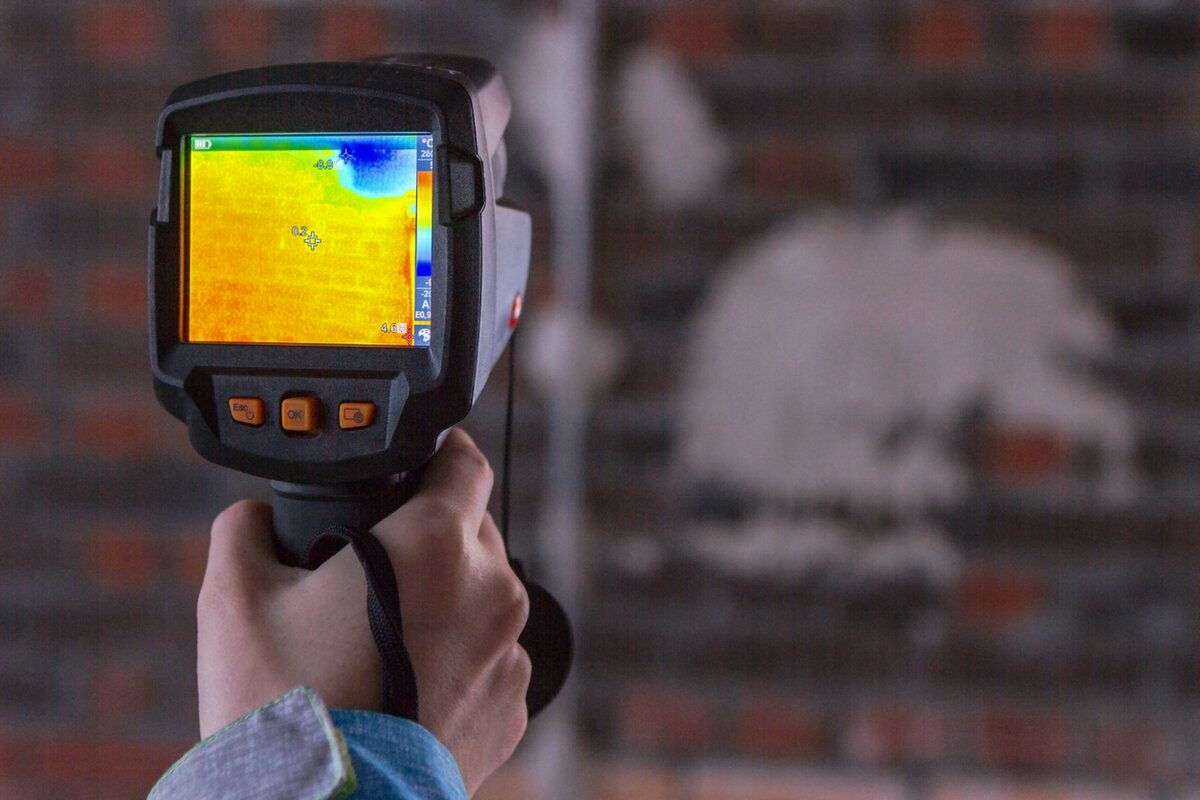
Leak detection is about locating the leak before anything is opened. Depending on the symptom, that means watching the meter under controlled conditions, listening at the floor or the wall, thermal imaging for temperature differences, pressure testing sections of the system, or isolating the supply from the drain side to establish which one is losing water. The aim is a location specific enough to open one area, not an investigation carried out with a demolition hammer.
Whole-home repipes
Replacing a failing water system wall to wall, usually because the third leak in a year made the decision for you.
- Repeated leaks in different places, not the same one twice
- Galvanized steel or polybutylene supply lines still in service
- Discolored water from the faucets, particularly first thing in the morning
- Frequent pinhole leaks in copper
- A slab leak that has already been repaired once
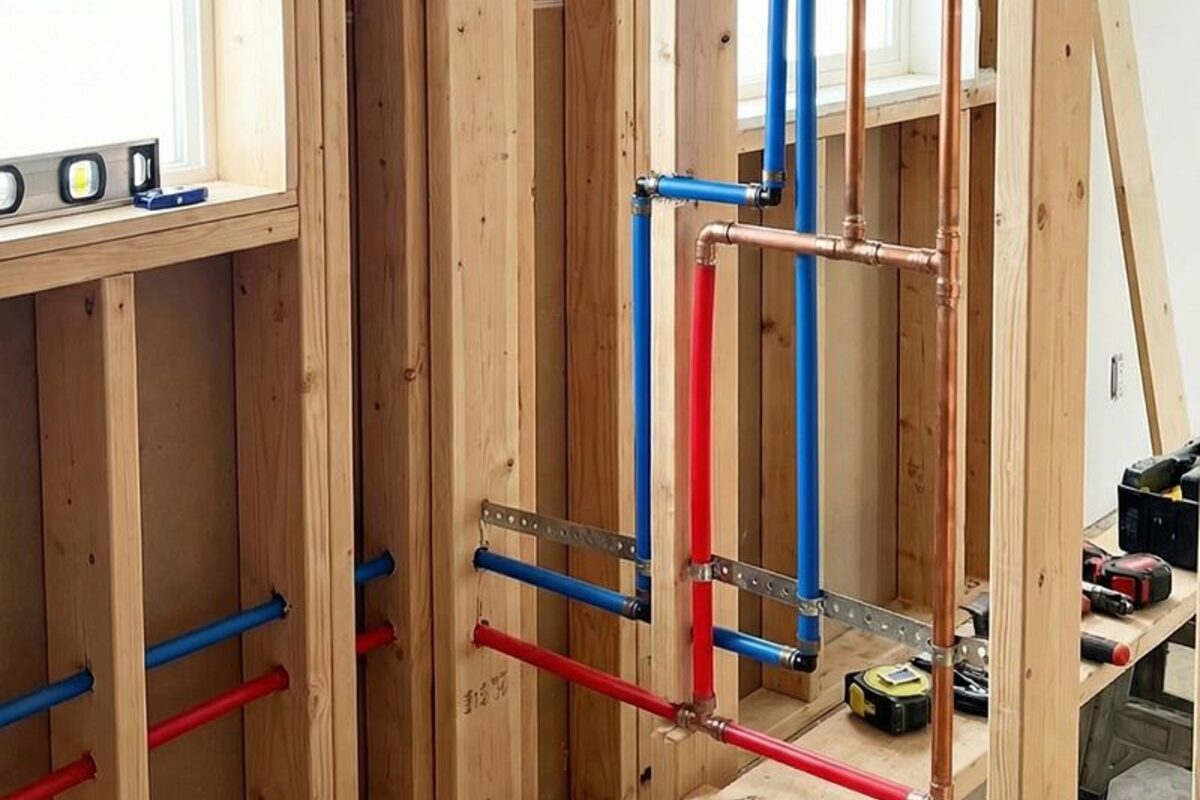
A repipe replaces the water system wall to wall, hot and cold, in copper or PEX, fished through the existing structure so the patch-and-repair cycle ends. The decision is usually arithmetic rather than preference. When a house leaks somewhere new every few months, the repairs and the damage they cause overtake the cost of replacing the system once. The work is as much about how the walls are opened and closed as it is about the pipe.
Water softeners and treatment
The water gets tested first, then a system sized to what your water actually is.
- White scale on fixtures, shower glass and the inside of the kettle
- Soap that will not lather, or laundry that stays stiff
- A tankless water heater needing descaling more often than it should
- Taste, odor, or staining that the household notices
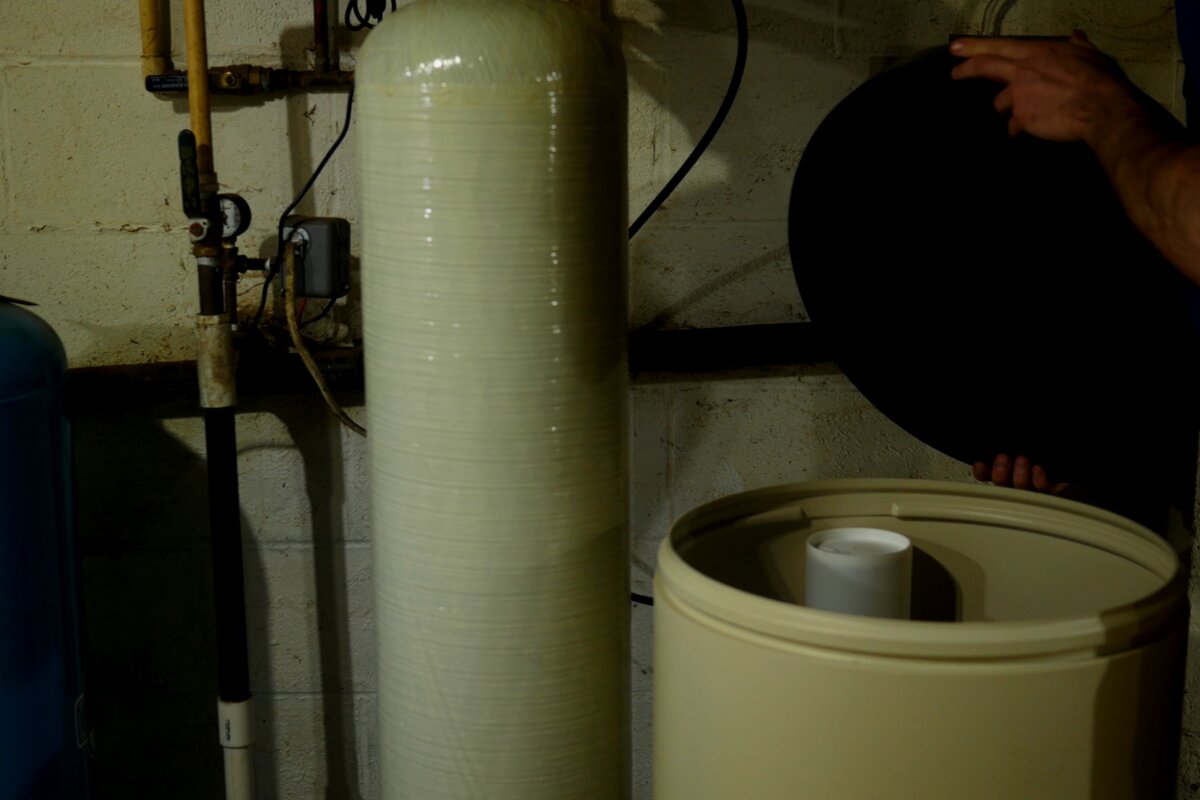
The water gets tested first, and the system is sized to what the water actually is. A softener removes the hardness minerals, calcium and magnesium, by ion exchange, which is what stops scale. A filter deals with sediment, taste, odor and chlorine. They solve different problems and are not substitutes. A test result decides whether you need one, the other, both, or neither.
Fixtures, faucets, and disposals
Faucets, toilets, shower valves, and garbage disposals, repaired or replaced.
- A faucet that drips, or a handle that has to be held to keep water running
- A toilet that runs on its own, or rocks at the floor
- A shower valve that will not hold temperature
- A disposal that hums without turning, or leaks from the housing
Faucets, toilets, shower valves and disposals, repaired or replaced. Fixture work is usually small, and the useful part of it is diagnosis. A toilet that runs is a flapper or a fill valve. A shower that will not hold temperature is usually the cartridge. A faucet that drips is almost always a washer or a cartridge, not the whole fixture. Knowing which saves replacing things that were never broken.
2 photographs on this page are licensed stock images rather than photographs of this shop's own work. The shop’s own job photographs are in the work gallery on the home page.
Telling the lookalikes apart.
Most of the money in this trade is decided by which of two similar problems you actually have. These are the distinctions worth understanding before you call anyone.
A supply leak, or a drain leak
Supply-side water is under pressure, so it runs continuously. The meter spins with everything off, and the damage grows even when nothing is being used. Drain-side water only appears when something drains. It shows up in bursts, and often smells. Establishing which side is losing water is the first step, and it usually needs no wall opened.
Under the slab, or above it
A slab leak announces itself as a warm floor, a climbing bill, or the sound of running water in a quiet house. A leak above the slab shows as damp plaster, a stained ceiling, or a baseboard that will not dry. The distinction matters because the repairs are different. It also stops a slab being opened to chase a leak that was never under it.
Repair the leak, or repipe the house
The rule that holds up: repairing a leak in a system that is otherwise sound is correct. Repairing the third leak in a year is not. Repeated failures in different places point at the material rather than at one joint: galvanized steel corroded through, polybutylene gone brittle, or copper pinhole-leaking across its length. At that point the arithmetic favors replacing the system once.
A softener, a filter, or neither
A softener and a filter are not the same product, and neither is a general improvement. Hardness minerals cause scale, and a softener removes them. Sediment, taste, odor and chlorine are handled by filtration. If the water tests clean and scale is not a problem, the honest answer is that nothing needs installing.
Questions worth asking any plumber.
Including this one. A straight answer to these is the difference between a quote and a guess.
- Ask where the water meter is and how to read it. That is how you confirm a supply leak yourself.
- Ask for the leak to be located and shown to you before any wall, floor or slab is opened.
- For a repipe, ask which lines are being replaced, how the walls get opened, and how they get closed again.
- Ask what the water test measured before any treatment system is quoted.
- Ask what happens to the old pipe. The material matters, and some of it needs proper handling.
What actually happens when you call.
- 01
You call or text
Tell us what it is doing, and what it stopped doing. A photo of the tank label or the leak helps more than a paragraph.
- 02
We ask the questions that narrow it down
The point is showing up with the right part on the truck, not showing up twice.
- 03
The work gets done
Repairs, replacements, and installs, carried out by the people who quoted it.
- 04
Questions after the fact
Same number, same people. If something needs looking at again, you know who to call.
Repipes, leaks & water: the questions that come up.
How do I know if I have a slab leak?
The common signs are a water bill that has risen without explanation, the meter moving while every fixture is off, a warm patch on the floor, and the sound of running water in a silent house. None of those is proof on its own. Any one of them justifies finding the leak rather than waiting for it to surface.
Do you have to break the slab to find a leak?
Not to find it. Detection narrows the location using the meter, acoustic listening, thermal imaging and pressure testing. When the floor is opened, it is opened in one place with a reason. Breaking concrete is sometimes the repair, but it should never be the search.
How long does a repipe take?
It depends on the size of the house, how many fixtures it serves, and how the lines can be fished through the structure. Most repipes are measured in days rather than hours, and water is usually restored to some fixtures before the whole job is finished. Ask for the schedule, and for when the water will be off, before agreeing.
Why does the pipe material matter on an old house?
Because it decides whether you are repairing or replacing. Galvanized steel corrodes from the inside and is usually beyond saving. Polybutylene becomes brittle and fails at fittings, and is widely treated as a replace-on-sight material. Copper is generally good, but pinhole leaks across its length suggest the system is failing generally rather than in one place.
Do I need a water test before buying a softener?
Yes. A test establishes the hardness and what else is in the water. That decides whether a softener is the right product, how it should be sized, and whether filtration is needed as well. A system installed without that is a guess. Softeners are sized and regenerated on numbers rather than on impressions.
Water is coming in and I cannot find the shutoff. What do I do?
The main shutoff is usually where the supply enters the house: at the meter box, on the wall of the garage, under the house at the crawlspace hatch, or outside at the front of the property. Closing it stops everything, which is the right trade when water is going into a wall or a floor. Then call (559) 758-6237 rather than send an email, because a burst supply line is not a job for an inbox.
Is leak detection free, or a charged visit?
A visit that has to find the leak, or troubleshoot before it can be quoted, is the kind of service call that carries a charge. A project estimate, for a repipe or a treatment system, is free. Call and we will tell you which one your job is.
What warranty comes with a repipe?
Workmanship coverage depends on the job, so ask when you call and the answer will be specific to your project. On fixtures and equipment, the manufacturer's warranty applies and varies by product. We do not advertise a blanket parts-and-labor warranty.